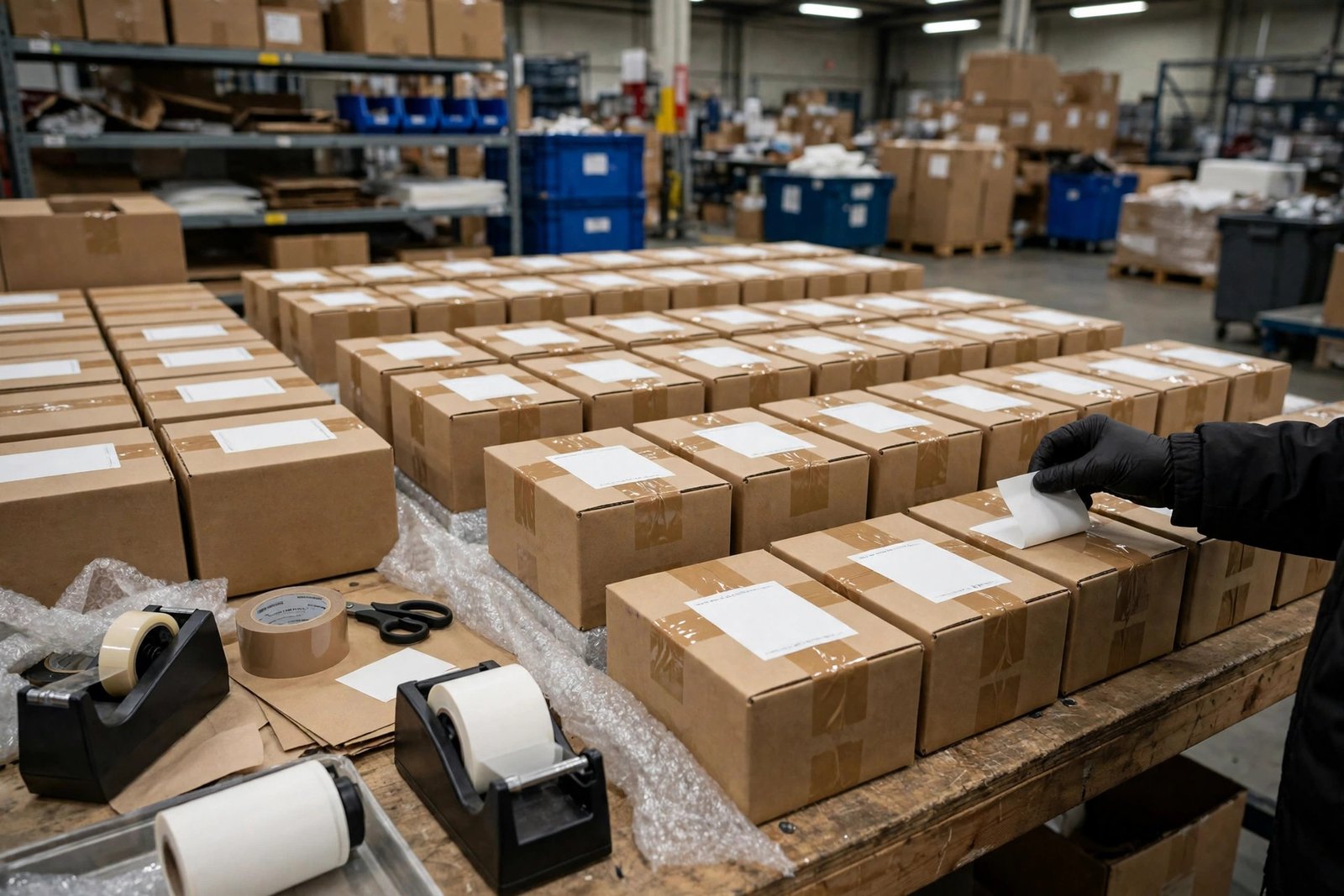
Returns are a normal part of selling online. A size is wrong, a colour looks different on a screen, an item arrives damaged, or a customer simply changes their mind where your policy allows it. Sellers who treat returns as an occasional annoyance tend to handle each one slowly and inconsistently, which costs money and goodwill. Sellers who build a simple, written system for handling returns process them quickly, recover more items in resalable condition, and often turn a disappointed customer into a repeat buyer.
This guide gives small sellers a practical returns system: what to decide in your policy, how to guide the customer through sending an item back, how to label and track return parcels, what to do when a return arrives, and how to use return data to prevent the same problems recurring. It focuses on sensible general practice that applies wherever you sell, and it leaves legal specifics to your own obligations, which vary by place and by what you sell. The aim is a process that is fair, fast, and affordable.
Write a Returns Policy Customers Can Actually Use
Your policy is the foundation. It should state, in plain language, which items can be returned, the timeframe for requesting a return, the condition items should be in, who pays for return postage in different situations, and when and how refunds, exchanges, or store credit are issued. Place it where customers will find it before they buy, not only after a problem occurs: a delivery and returns page linked from product pages and checkout, plus a short summary in order emails.
Clarity prevents most returns disputes. If certain items cannot be returned for hygiene or personalisation reasons where that is permitted, name those categories explicitly. If a returned item must be unused with its original packaging, say so, and also say what happens if it is not, such as a partial refund where your policy and obligations allow. Customers accept firm rules when they knew them in advance. They resist rules that appear for the first time in a support reply.
Keep the tone helpful rather than defensive. A policy written as a list of warnings tells customers you expect trouble. The same rules written as a simple step-by-step, explaining how to start a return and what happens next, tell customers you have done this before and will look after them. That confidence matters, because many buyers choose between similar sellers based on how safe the purchase feels. Returns confidence is part of that feeling, alongside clear delivery information such as the choices described in our article on shipping options at checkout.
Make Starting a Return Effortless
The first step should take the customer less than a minute. Provide one clear route: a returns form, a dedicated email address, or the returns function in your selling platform if you use one. Ask only for what you need: order reference, item being returned, and reason. The reason is valuable data for you, and asking for it politely, with a short list of options, gives you far better information than a blank box most customers will skip.
Respond quickly with clear instructions and, where you provide one, the return label or the return address. A slow or confusing reply at this point is where frustration builds and where parcels start arriving unexpectedly, unlabelled, or sent by expensive services the customer expects you to cover. Your reply should confirm the return address exactly as it should appear on the parcel, any reference number to include, the timeframe for sending the item back, and what will happen once it arrives.
Authorise returns before they are sent whenever you can. An authorisation step lets you catch misunderstandings early: a customer returning the wrong item, sending to an old address, or returning something that could have been resolved with a replacement part or simple advice. It also lets you expect the parcel, which makes checking it in far easier. Keep a simple log of authorised returns with the date, order, reason, and expected item, so nothing depends on memory.
Return Labels, Packaging, and Tracking
Decide in advance how return postage will work and explain it in the policy. Common approaches include providing a prepaid label for faulty or incorrect items, providing a label and deducting its cost where your policy states that, or asking the customer to post the item and keep proof of postage. Whichever model you choose, consistency matters more than the model itself. Customers mainly want to know the arrangement before they are standing at a counter.
If you provide labels, make them easy to use. The label should show your correct returns address and a reference that links the parcel to the order. Our overview of shipping labels explained covers what makes a label readable and reliable, and the same rules apply in reverse: flat on the largest surface, old labels removed or covered, and a copy of the return reference placed inside the parcel as a backup in case the outer label is damaged. Ask customers to include the reference inside even when you do not supply the label, because an unidentified return can sit unprocessed for days.
Advise customers to reuse the original packaging where it is still protective, or a suitably sturdy alternative, and to pack the item so it survives the return journey. A surprising share of return losses happen because a perfectly good item was sent back in a thin bag or an unsealed box and arrived damaged. A short packing note in your return instructions prevents that, and the guidance in how to pack a parcel safely applies just as much to the journey back. Encourage proof of postage or tracked return for higher-value items, and keep your own record of the return tracking where a label was provided, so you can see when a parcel is on its way.
When the Return Arrives: Check-In and Decisions
Process returns on the day they arrive, or the next working day at the latest. Open each parcel against your returns log, confirm the item and its condition, and record the outcome immediately: accepted for refund, suitable for exchange, needs cleaning or repacking before resale, or not as described in the return request. Prompt processing lets you issue refunds while the return still feels recent to the customer, and it returns good stock to your shelves quickly, where it can be sold again.
Inspect fairly and photograph problems. If an item comes back used, incomplete, or damaged in a way that was not reported, a photo taken at check-in supports a calm, factual conversation with the customer and protects you if the platform or payment provider asks for evidence. Without that record, discussions become one person’s word against another’s, which helps nobody. Keep the tone of any follow-up factual and solution-focused: explain what you found, what your policy says, and what you propose.
Complete the loop with the customer. Send a short message confirming the return has arrived and stating when the refund or exchange will be completed. Many sellers skip this step, leaving the customer to chase. That single confirmation message prevents most chase emails and chargeback threats, and it costs almost nothing. For exchanges, confirm the replacement’s dispatch with its tracking reference, just as you would for a new order, following the same communication habits described in our small business shipping guide.
Controlling the Cost of Returns
Returns will never be free, but their cost is controllable. The largest element is usually postage, followed by staff time, unsellable stock, and replacement packaging. Reduce postage cost by choosing a return service that fits the item: a returned lightweight garment does not need the fastest tracked service, while a high-value electronic item may justify tracking and a signature. Match the service to the risk, as you do for outbound orders.
Reduce handling time with preparation. A returns station or box containing your log, a camera or phone for condition photos, spare packaging, and a clear spot for checked items awaiting resale keeps each return to a few minutes. Sellers who process returns in a daily batch, rather than one at a time between other tasks, finish faster and make fewer recording errors. If your outbound volume is growing too, the batching ideas in shipping multiple orders a day apply in reverse: group similar tasks, work in one direction, and record as you go.
Protect the value of returned stock. Items checked promptly, cleaned or steamed where appropriate, and repackaged neatly can usually be resold as new if they meet that standard, or sold honestly as opened or graded stock where they do not. Items left in a corner for a month lose value, miss selling seasons, and get forgotten. Speed at check-in is therefore a financial decision, not just good housekeeping. Track your recovery rate, meaning the share of returned items resold and at what price, so you can see whether your process is protecting value.
Learn From Every Return
A return is information. Record the reason in consistent categories and review the totals monthly. If one product is returned repeatedly for the same reason, the product page is the place to fix it: a clearer size chart, a better photograph, a note about colour or fit, or a more accurate description of what is in the box. Sellers often discover that a single confusing listing generates a large share of their returns, and that an hour spent improving that listing saves postage week after week.
Damage patterns are equally instructive. Repeated damage to one item or on one route points to packing that needs strengthening for that product. Repeated non-delivery returns, where parcels come back because the customer was never reached, point to address quality or communication at dispatch. Each pattern has a different fix, and your returns log is what separates the patterns from guesswork.
Finally, watch the overall return rate by product and by month. A sudden rise can signal a faulty batch, a listing error after an edit, or a change in a carrier’s handling. A slow rise can signal that a product’s quality has drifted from its description. Either way, the returns data notices first, provided someone is reading it. Building that monthly five-minute review into your routine is one of the cheapest quality controls a small business can run.
Conclusion
Handling returns well comes down to a clear policy, an effortless first step for the customer, sensible labels and packing for the journey back, same-day check-in with a fair inspection, and a short confirmation that closes the loop. Add a monthly look at your return reasons and costs, and returns stop being a drain and become a source of useful information about your products and listings. Customers remember sellers who handled a problem smoothly, and a return dealt with promptly and honestly is often the reason a buyer trusts you with their next order.