
Most of us have refreshed a tracking page and watched a parcel move in small, sometimes puzzling steps: accepted, in transit, arrived at a facility, out for delivery. Those short updates are the visible surface of a much larger system. Behind each line sits a network of labels, scanners, sorting hubs, vehicles, and data systems, all recording where a parcel is as it passes through their hands.
This article explains how parcel tracking works from the moment a label is created to the moment the parcel is delivered. You will learn what a tracking number really is, why scans happen at some points and not others, why tracking sometimes seems to freeze for days, and how to read the timeline of your own shipment with more confidence and less anxiety.
It Starts With the Label and the Tracking Number
Every tracked parcel carries a unique identifier, its tracking number, printed on the shipping label as both readable text and a barcode or similar scannable code. When a sender creates a shipment in a carrier system, that number is reserved and linked to the shipment details: sender, receiver, service, and address. You can learn more about the label itself in our guide to shipping labels explained.
This is why tracking often shows a first entry such as label created or shipment information received before the carrier physically has the parcel. The data exists, but the box has not yet been handed over. The first physical scan, when the parcel is collected or dropped off, is the true start of its journey. From then on, each scan adds a dated event to the record attached to that number, building the timeline you see when you track the parcel.
The tracking number is also your key to help. Without it, carrier support teams have far fewer ways to locate a shipment in a system handling huge volumes, although our guide on how to track a shipment without a tracking number outlines the fallback options worth trying.
What a Scan Actually Is
A scan is simply a recorded read of the parcel’s label at a particular place and time. Scans happen in several ways. Handheld devices are used by collection and delivery drivers. Fixed scanners read labels automatically as parcels travel along conveyor belts in sorting facilities. Staff at counters and depots scan parcels as they accept, load, and unload them. Each read sends the parcel’s identifier, the location, and a timestamp to the carrier’s system, which matches it to the shipment and generates the customer-facing event.
Not every handling step produces a public tracking event. A parcel may be moved, loaded, and unloaded several times inside one building while generating only an arrival and a departure scan. Carriers choose which events to display, aiming to show meaningful progress without drowning customers in internal movements. This is also why two carriers can carry similar parcels and present quite different timelines. The underlying journeys may be alike, while the number of events each company chooses to publish differs.
The Journey of a Typical Tracked Parcel
Although routes vary, most parcels pass through a recognisable sequence. Understanding the sequence makes each tracking status easier to interpret, and our companion guide to tracking statuses explained decodes the exact wording you are likely to see at each stage.
Collection and first depot
After handover, the parcel travels to a local depot or sorting point. Scans here confirm acceptance into the network and often show the parcel being sorted toward the region of its destination. For many services this happens in the evening, so a parcel dropped off in the afternoon may show its first sorting events late that night.
Linehaul and sorting hubs
Next comes the long-distance leg, sometimes called linehaul, by road or air to a hub nearer the destination. Large hubs sort enormous volumes overnight using automated equipment that reads each label and routes the parcel to the correct outbound stream. Tracking at this stage tends to show arrivals and departures at facilities, with place names that reflect the hub network rather than the parcel’s exact road route.
Destination depot and out for delivery
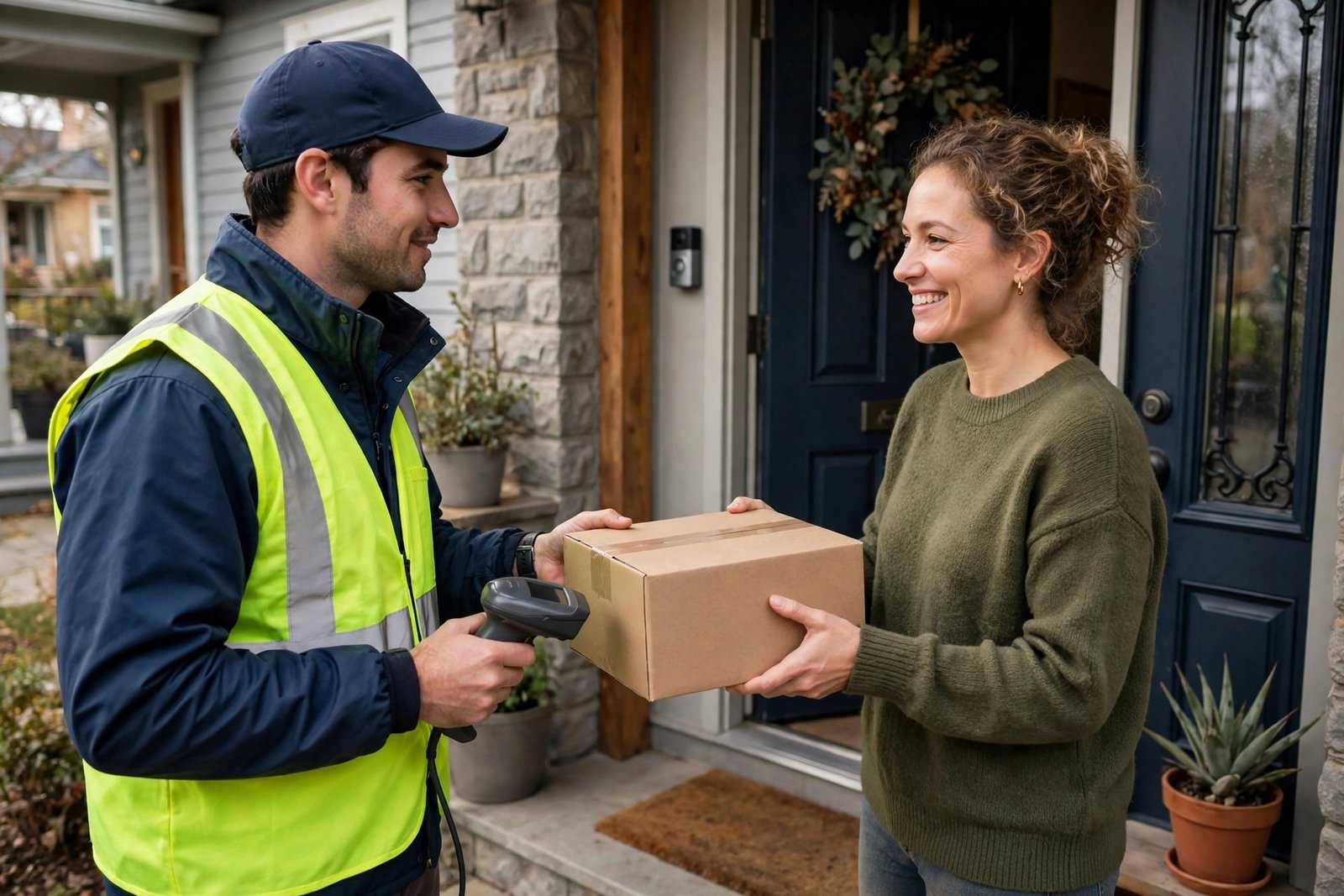
At the destination depot, the parcel is sorted onto a delivery route and scanned as it is loaded onto the delivery vehicle. That load scan is what triggers the familiar out for delivery status. The driver then works through the route, and the final scan at the doorstep closes the journey and generates the delivery record discussed in our guide to proof of delivery.
Why Tracking Sometimes Seems to Stop
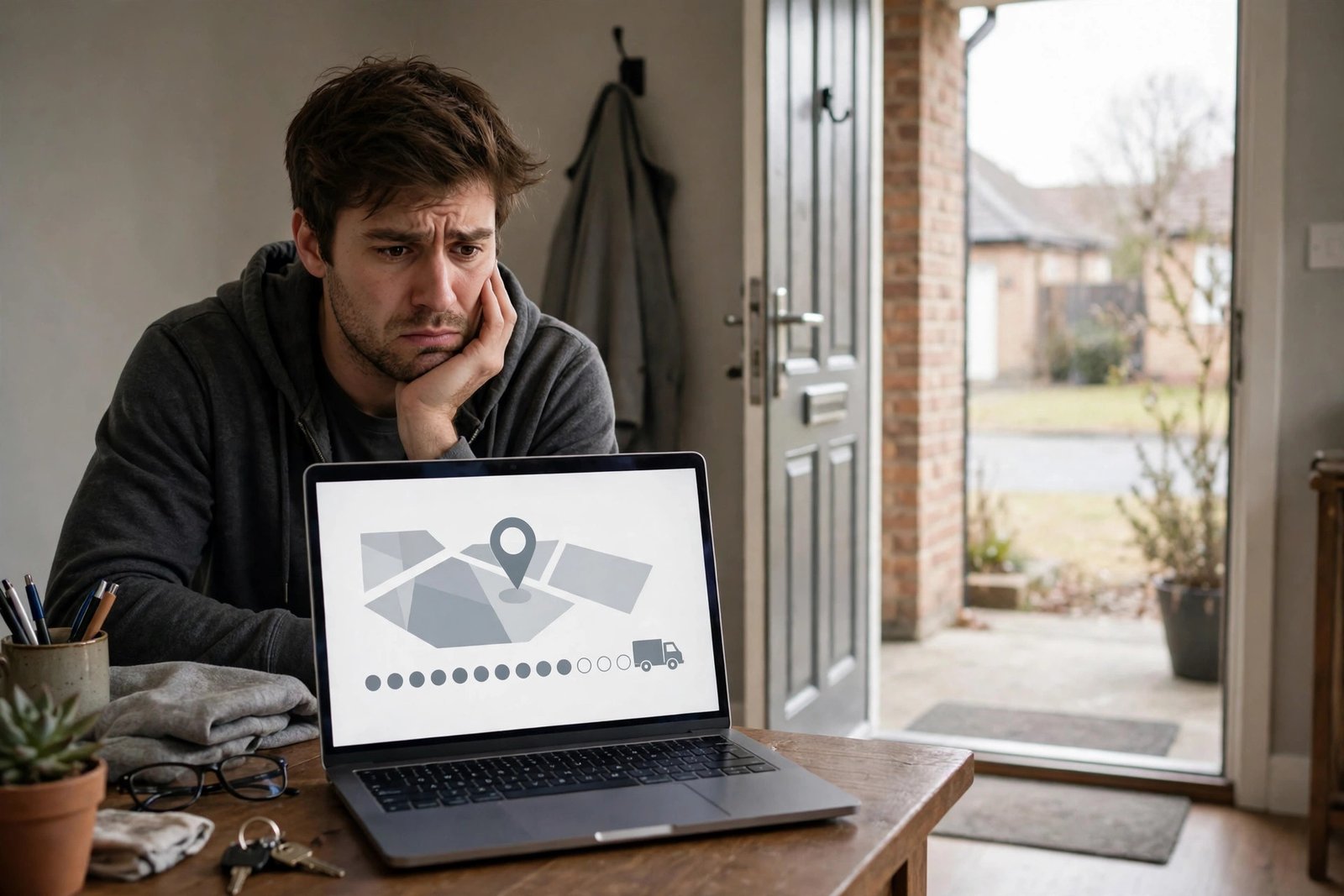
The most common worry in tracking is silence: no new event for a day or several days. Silence feels like loss, but in most cases it means the parcel is between scan points. Long road or air legs, weekends, and international transit all create natural gaps. An international parcel, for example, may leave the origin country and generate no customer-facing event until it is processed on arrival in the destination country, which can take days depending on the route and clearance.
Customs processing is another quiet stage. While a parcel waits for or undergoes clearance, its status may sit unchanged or show a general customs message. The declaration data submitted by the sender is what officials work from during this stage, which is why the accuracy described in our customs paperwork guides matters so much.
Technical factors can add to the gaps. A damaged or unreadable label may need to be replaced by hand, which slows the automated flow. A scan can occasionally fail to upload promptly from a device and appear later, sometimes out of order. Weather, vehicle problems, and peak-season volumes can also stretch the time between events. None of these automatically means a parcel is lost, but a gap that extends well beyond the service’s expected delivery window is worth a polite enquiry with the tracking number ready.
Tracking Across Carriers and Handover Partners
Many shipments are not carried by one company from door to door. A parcel may start with one carrier, travel internationally through partner networks, and be delivered by the local postal operator or a regional courier in the destination country. Each handover is a data challenge as well as a physical one. The partners exchange scan information so that the customer can follow the journey in one place, but the detail and timing of partner events vary.
This is why the same shipment can sometimes be tracked on two websites with slightly different information, and why a new local tracking number may appear partway through the journey. When a partner assigns its own reference, good systems link the two numbers together so the original number keeps working. If tracking seems to end abruptly at a border or a handover message, trying the same number on the destination country’s delivery partner site is a useful next step.
For senders choosing services, this partner reality is worth remembering. The tracking experience your customer receives depends on the whole chain, not just the company you hand the parcel to, which is one of the practical points to weigh when you choose a courier.
How Accurate Is Tracking Information?
Tracking is best understood as a record of scans, not a live map of the parcel itself. Standard parcel tracking does not follow the box continuously by satellite. It reports the last place the label was read. Between scans, the system infers that the parcel is in transit, and estimated delivery dates are predictions built from the service standard and the parcel’s progress so far.
That distinction explains most tracking oddities. An estimated date can move when a parcel misses a connection or a hub runs late. A status can appear in a slightly wrong order when device uploads are delayed. A parcel can even be physically closer to you than its latest scan suggests, because it is on a vehicle travelling from the last scanned facility. None of this makes tracking unreliable. For the great majority of parcels, the scan record is accurate and complete. It simply means the timeline should be read as checkpoints passed, not as a second-by-second position.
Some premium and specialist services do add richer data, such as more frequent scans or sensor information for sensitive goods, but the checkpoint principle still applies. Knowing this helps set expectations: tracking tells you where your parcel was last confirmed and what stage it has reached, and that is usually exactly the information you need.
Making Tracking Work Better for You
Senders can improve tracking quality more than they realise. Print labels cleanly, attach them flat on the largest side of the box, and keep them free of tape glare and wrinkles so scanners read them first time. Provide the receiver’s phone number and email where the booking allows, because many carriers send proactive updates and delivery options through those channels. Share the tracking number and the carrier name with your receiver as soon as you have them, and keep your own copy until delivery is confirmed.
Receivers can help themselves by tracking through the carrier’s own site or app for the fullest event detail, checking after key transition times such as the evening sort or the morning route loading, rather than refreshing constantly through the day. If a delivery attempt is missed, the tracking record and the card or message left by the driver together tell you the rearrangement options available to you.
Conclusion
Parcel tracking works by reading a unique label at checkpoints along a planned route and turning those reads into the timeline you follow online. Each status is a confirmed checkpoint, not a continuous position, and gaps usually mean a parcel is travelling between checkpoints rather than lost. Once you understand scans, hubs, handovers, and estimates for what they are, tracking becomes a calm and genuinely useful tool: it tells you where your parcel has been, what stage it has reached, and when you need to act.


6 Comments on “How Parcel Tracking Works: Scans, Events and Statuses”