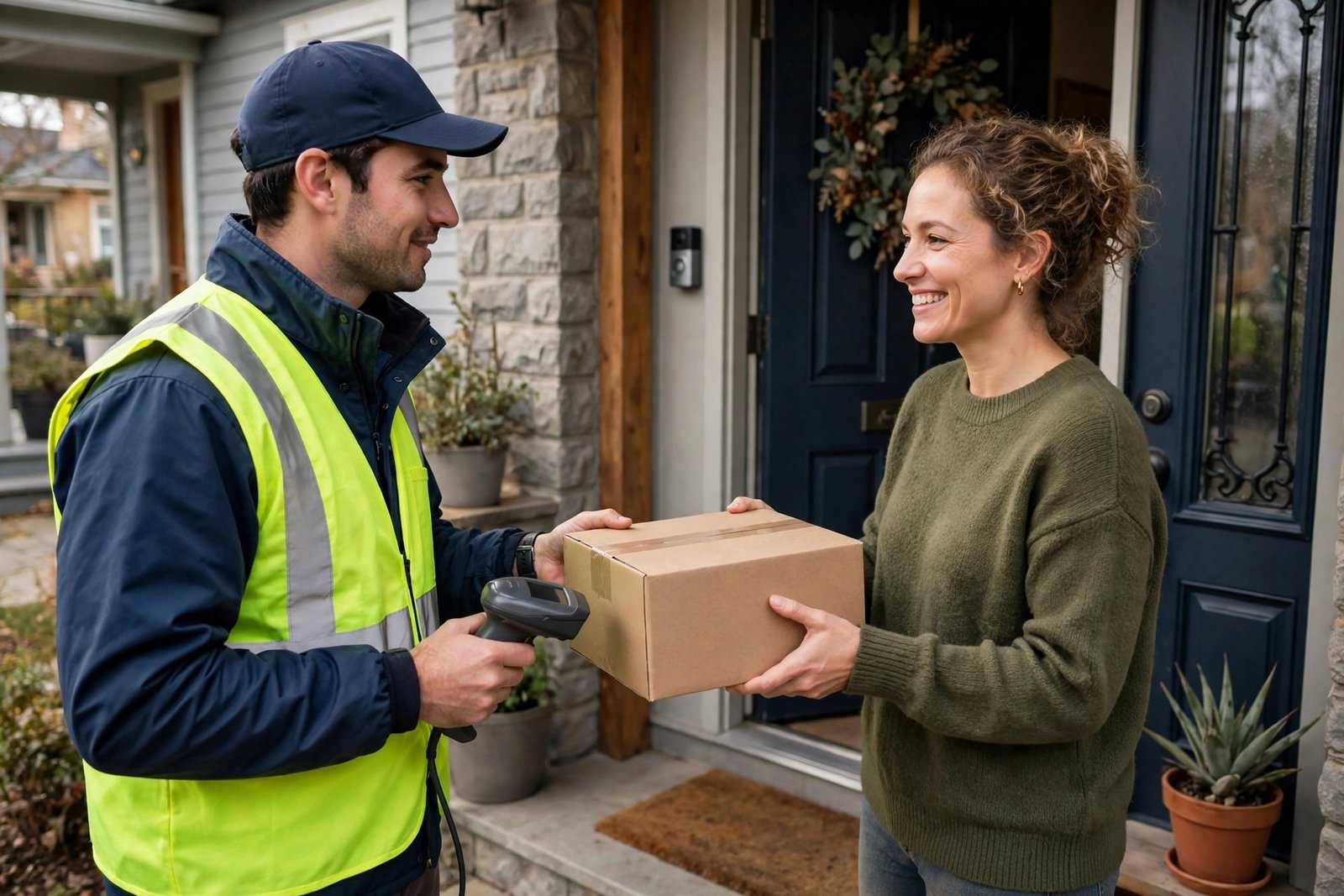
The delivery moment takes only a few seconds. A driver hands over a parcel, the receiver takes it, and the van moves on to the next stop. Yet that brief handover is the point where responsibility for the goods passes from the carrier to the receiver, and it is often the moment that matters most if anything is questioned later. Proof of delivery is the record of that handover, and it exists to answer a simple question with evidence: did this parcel actually arrive, and if so, when and into whose hands?
This guide explains proof of delivery in plain terms. It covers what the record usually contains, the different forms it takes, from signatures to photographs, why it matters to senders, receivers, and businesses, and what to do when the record and reality do not seem to match.
What Is Proof of Delivery?
Proof of delivery, often shortened to POD, is the confirmation generated when a shipment is delivered. It is created by the delivery driver at the point of handover, using a handheld device or app, and it is stored against the shipment’s tracking record. Anyone checking the tracking later can usually see that the parcel was delivered, along with the supporting details the carrier captured.
A typical proof of delivery record includes the date and time of delivery, the name of the person who accepted the parcel where one was collected, and the delivery location. Depending on the service and the carrier, it may also include a signature image, a photograph of the parcel at the door, or a location pin recorded by the driver’s device. Together, these details turn a delivery from a claim into a documented event.
Proof of delivery closes the loop that begins when a shipment is created. The journey starts with documents such as the waybill, continues through the scans explained in our guide on how parcel tracking works, and ends with the POD as the final entry in the parcel’s story.
The Main Forms of Proof of Delivery
Not every delivery is confirmed in the same way. Carriers match the method to the service level, the value of the goods, and what is practical at the door. Understanding the main forms helps you read your own delivery records correctly and choose suitable services when you ship.
Signature on delivery
The traditional form is a signature. The receiver signs on the driver’s device or on paper, and that signature is stored with the delivery record. Services sold as signed-for or signature-required make this step a condition of handover, meaning the driver should not simply leave the parcel unattended. A signature is strong evidence because it links an identified person to the moment of receipt, which is why it is commonly required for valuable, sensitive, or business deliveries.
Photographic proof
Many carriers now take a photograph of the parcel at the delivery location, often showing it at the door or in the safe place where it was left. Photo proof has become common for standard home deliveries because it helps receivers find parcels left in a nominated spot and gives senders visible confirmation of where the parcel ended up. A photo shows place rather than person, so it answers a slightly different question from a signature.
Name, time, and location records
Even without a signature or photo, the driver’s device normally records who accepted the parcel by name, the exact time, and the location of the scan. Contact-free delivery methods, which became widespread in recent years, often rely on this combination: the driver records the name of the person at the door or notes that the parcel was left as instructed, and the time and place are captured automatically. This lighter record still provides useful evidence, though it carries less detail than a signature service.
Why Proof of Delivery Matters
For receivers, proof of delivery is reassurance and a starting point. When a tracking page says delivered, the POD details tell you when it happened and who accepted the parcel, which often resolves the mystery immediately. The parcel may be with a neighbour, a reception desk, a family member, or in the safe place you nominated and then forgot about.
For senders and sellers, the stakes are higher. Proof of delivery is the evidence used to confirm that an order reached its buyer, to close customer enquiries, and to respond to claims that an item never arrived. Marketplaces, payment providers, and carriers all treat the POD as a central piece of evidence when a delivery is disputed. A business without access to clear delivery records will struggle to resolve those cases fairly or quickly.
It also matters operationally. Delivery records feed the statistics businesses use to judge carrier performance, spot addresses that repeatedly cause problems, and decide which services to offer at checkout. On a personal level, if you sent something important, the POD is the difference between knowing it arrived and hoping it did.
How Proof of Delivery Works in Practice
The process is straightforward. When the driver completes the delivery, they select the outcome on their device: delivered to the named person, delivered to another person at the address, left in a safe place, or delivered to a collection point, depending on what happened. They capture any required signature or photo, and the device uploads the record, usually within moments if there is a signal.
That upload updates the tracking status to delivered and attaches the POD details to the shipment record. Senders who booked the shipment can normally view the details through their carrier account or via a link, and receivers can often see the time, the name recorded, and any photo through the tracking page. Keeping your tracking reference safe until the POD appears is a sensible habit, and our guide to tracking statuses explained will help you interpret the final delivered status alongside the earlier updates.
For businesses receiving goods, there is a mirror-image process. Staff checking a delivery against the packing list should note any damage or shortage at the time of handover and, where the system allows, have it recorded before signing. Signing a clean receipt for a visibly damaged box makes later claims harder, because the POD suggests the goods were accepted in good order.
When the Record and Reality Disagree
Occasionally, tracking shows delivered but the receiver cannot find the parcel. Before assuming the worst, work through the POD details calmly. Check the time of delivery and who was at home then. Look at the photo, if there is one, and compare the doorway or location with the actual address. Check safe places, side gates, porches, bins used as shelter, reception areas, and neighbours. A large share of these cases end with the parcel found in one of those spots.
If the parcel genuinely cannot be found, contact the carrier promptly and quote the tracking number and the POD details. Mistakes do happen: a scan made a street too early, a parcel delivered to a similar address, or a record uploaded against the wrong shipment. Carriers can often ask the driver to confirm the location or revisit. Acting quickly helps, because driver memory and device location records are most useful soon after the event.
Senders should take the same steps before refunding or reshipping. Review the POD, ask the receiver to check the locations above, and open a carrier enquiry if the parcel still does not surface. A clear process protects honest customers and honest sellers alike, because decisions are based on the record and on reasonable checks rather than on whoever insists the loudest.
Proof of Delivery and Returns, Claims, and Records
Delivery evidence plays a quiet role in several processes beyond the delivery day itself. In returns, the POD for the outbound shipment and the tracking for the return shipment together show the full movement of the goods. In damage or loss claims, carriers look at the whole record, and a clean POD combined with a later damage report will prompt questions about when the damage was noticed, which is why prompt reporting matters.
For businesses, retaining POD records alongside invoices and order details for a reasonable period is good practice. Disputes and questions can arrive weeks after delivery, and the firm that can produce the delivery record in a minute resolves them with far less friction. If you sell online, understanding how delivery confirmation interacts with the options you promise buyers is worthwhile, and thinking carefully about shipping options at checkout helps you set the right expectations from the start.
Choosing Services With the Right Level of Proof
Not every parcel needs a signature. A low-value item that can safely be left at the door is often best served by a standard tracked service with photo proof, which keeps delivery flexible for the receiver. Higher-value goods, important documents, age-restricted items, and deliveries to shared addresses usually justify a signature service, even if it costs a little more, because the evidence and the controlled handover are the point of the service.
Think about the risk in practical terms. What would it cost you, in money and time, if this delivery were disputed and you had only a bare delivered scan to rely on? If the answer is more than the small price difference between services, choose the stronger proof. Senders who explain the delivery method to receivers in advance also reduce confusion, since a receiver expecting to sign will make sure someone is available.
Conclusion
Proof of delivery is the documented final step of a parcel’s journey. It records when the delivery happened, where, and who accepted the goods, using signatures, photos, or device records. That evidence reassures receivers, protects senders, and settles most delivery questions quickly and fairly. Choose a service with a level of proof that matches the value of what you are sending, keep your tracking reference until the record appears, and check the details carefully if anything looks wrong. Done well, the delivery record does its work silently, confirming that the parcel’s story ended exactly where it should.