You hand a parcel to a driver or a shop counter, receive a tracking number, and a day or two later it appears at another door, sometimes hundreds of miles away. In between, that parcel passes through a carefully choreographed network of collections, sorting hubs, linehaul vehicles and local delivery rounds. Most customers never see those middle stages, which is why a tracking gap or an unexpected depot scan can feel worrying. Understanding the journey makes tracking updates easy to read and delivery estimates easy to trust.
This guide follows a typical parcel from booking to doorstep, stage by stage. Exact timings and names vary by carrier and by service, but the sequence is broadly the same for domestic courier networks everywhere. You will see where your information on the waybill is used, why parcels are scanned so often, what happens overnight in a hub, and how the final last-mile delivery is organised. By the end, phrases like in transit, out for delivery and held at depot will have clear, practical meanings.
Stage 1: Booking, Packing and the Waybill
The journey starts before any vehicle moves. The sender packs the goods, weighs and measures the finished parcel, and books a service online, through an app, at a counter or through a business shipping platform. Booking creates the electronic waybill record and generates the shipping label with its barcode and tracking number. That number is the parcel’s identity for the whole journey. Every later scan is a note added to that identity, which is why entering addresses and weights correctly at this stage matters so much. If you are preparing a shipment now, follow the checks in how to fill out a waybill before you seal the box.
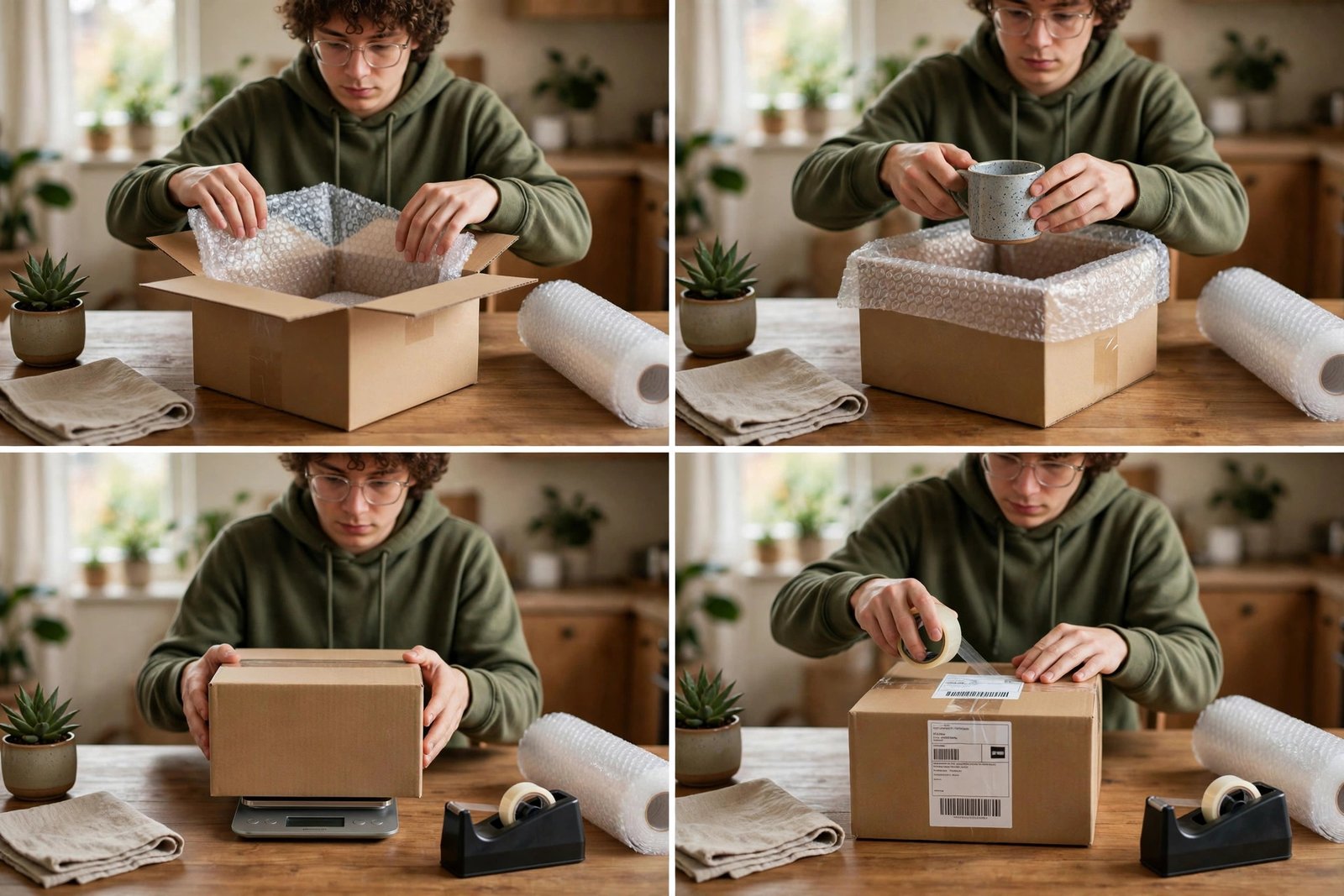
Packing is part of shipping, not a separate chore. Hubs handle parcels mechanically as well as by hand, vans brake and turn, and boxes travel stacked with other freight. A strong box, internal cushioning, sealed seams and a flat, readable label give a parcel the resilience it needs. Fragile contents need space and padding on all sides, and liquids need sealed inner packaging. A few extra minutes at the packing bench prevent most damage claims. Our detailed guide to how to pack a parcel safely covers box choice and cushioning for common household and business items.
At booking, the sender also chooses the balance of speed and cost: economy services that travel with standard hub cycles, standard next-day or two-day services, or premium timed options. The choice sets expectations for every later stage. An economy parcel collected on Friday may not enter the main linehaul until Monday, while a premium parcel is prioritised at each sort. Knowing which service you bought is the first key to judging whether a parcel is on time.
Stage 2: Drop-Off and Collection
Next, the parcel physically enters the network. Senders either drop it at a carrier shop, a partner retail counter, a locker bank or a depot, or hand it to a driver on a collection round. At handover, the parcel receives its first scan, often shown as collected, received or dropped off. Keep the receipt or confirmation from this moment. It proves when custody passed to the carrier and is your reference if the next scan is delayed.
Collection rounds run to cut-off times. A parcel handed over after the local cut-off, or dropped at a counter after the day’s driver has visited, will be recorded but will travel on the following cycle. This explains why a parcel booked in the evening often shows its first movement the next working day. Businesses that ship daily arrange collections to match their packing finish times, while occasional senders should check counter collection times before promising a customer a dispatch date.
From shops and collection points, parcels travel in vans or cages to the local depot. At the depot they are unloaded, scanned again and grouped by destination region. Local depots are the spokes of the network. They gather everything sent from their area and feed it into the national or regional system each evening. A tracking update naming a town you did not expect is often simply your local depot or the first consolidation point for your area.
Stage 3: Sorting Hubs and Linehaul Transport
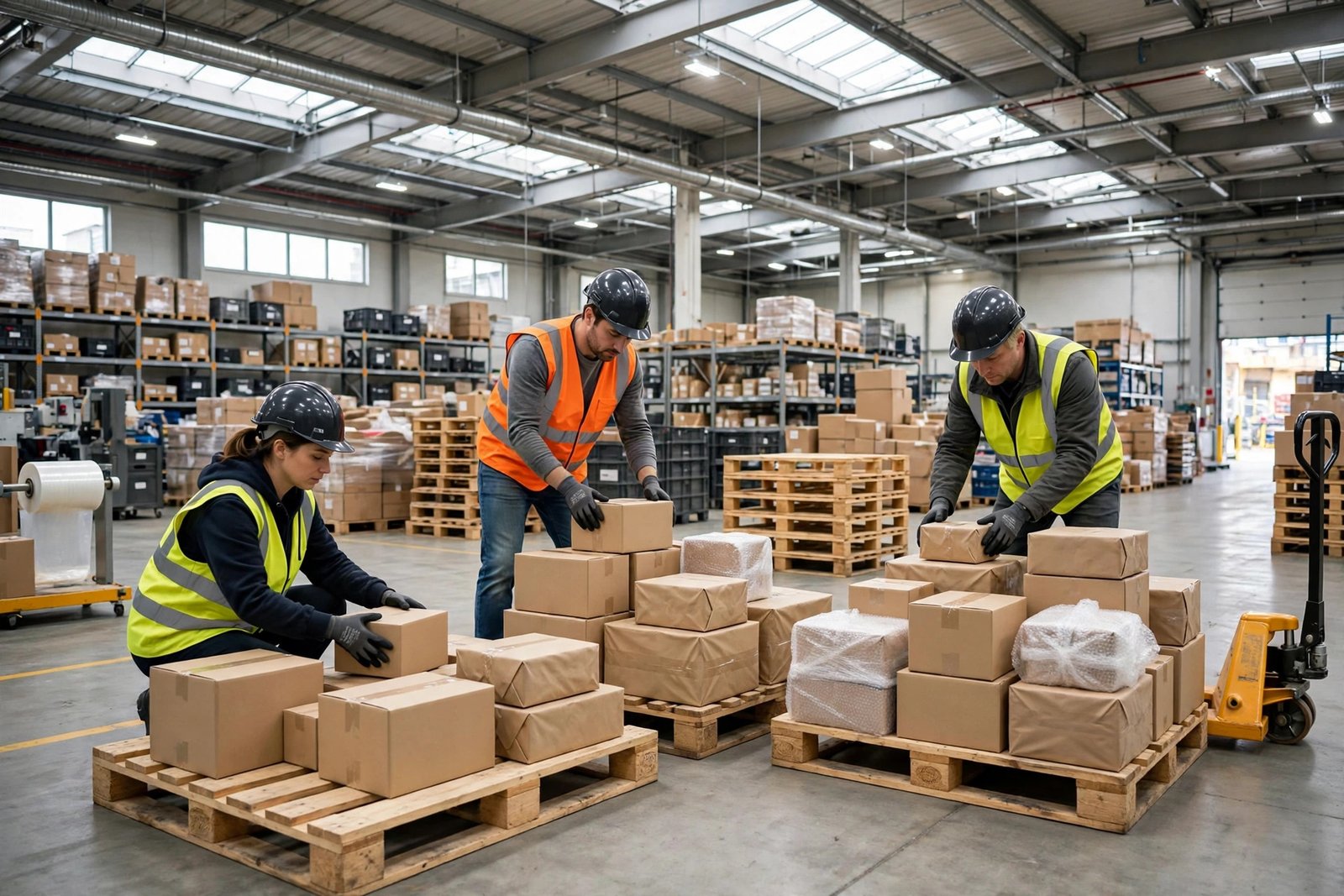
Overnight, the network does its heaviest work. Parcels from many local depots converge on large sorting hubs. There, automated belts, scanners and chutes read each label barcode and direct parcels into lanes for their destination depots, while staff handle oversize, fragile or unreadable items by hand. A parcel may pass through one hub on a short journey or two hubs on a long one. Each arrival and departure generates a scan, which is why tracking pages often show hub names late at night.
Between depots and hubs, parcels travel by linehaul, the long-distance leg performed by large trucks and, for some routes and services, by air. Linehaul runs to fixed timetables coordinated with hub sorts. If a vehicle is delayed by weather or traffic, or a parcel misses its planned sort because it arrived after cut-off, the parcel waits for the next cycle. That wait is the most common reason for a one-day slip in a standard service, and it is also why premium services cost more: they buy priority in loading and access to faster connections.
Security and safety checks happen inside this stage as well. Parcels may be X-rayed, weighed and measured automatically, and checked for restricted contents, especially before air transport. A parcel whose declared weight differs sharply from its measured weight, or whose label cannot be read, is set aside for manual processing. Accurate declarations and clean labels made at booking keep a parcel on the automated fast path instead of in the manual queue. To understand the identity document driving all of this, see what a waybill is and how its data feeds each scan.
Stage 4: Arrival at the Destination Depot
In the early morning, linehaul vehicles arrive at destination depots. Parcels are unloaded, scanned as arrived, and sorted again, this time into individual driver rounds. Sorting at this level is geographic and practical. A round is built around streets a single driver can cover efficiently, the size and weight a van can carry, and any timed commitments on that route. Parcels for flats, business parks and rural addresses on the same round are sequenced so the driver can follow a logical path with minimal backtracking.
If an address problem was detected earlier, this is where it often surfaces. A missing flat number, an unclear business name or a postcode that does not match the street may cause the parcel to be held for clarification rather than loaded. Carriers will usually contact the sender or receiver using the phone or email from the booking. Watching for such messages and replying quickly can save a full day. Where the depot offers it, receivers may also choose to collect from the depot or redirect to a pickup point at this stage.
Once loaded, the van’s parcels are scanned to the round and tracking changes to out for delivery. That status means the parcel is on a vehicle scheduled to attempt delivery that day. It does not guarantee a precise hour. Round order can change with traffic, timed deliveries and access issues. Many carriers now send an estimated window or a live map link on the morning of delivery using the contact details from the booking, which is another reason accurate receiver phone numbers matter.
Stage 5: Last-Mile Delivery and Proof of Delivery
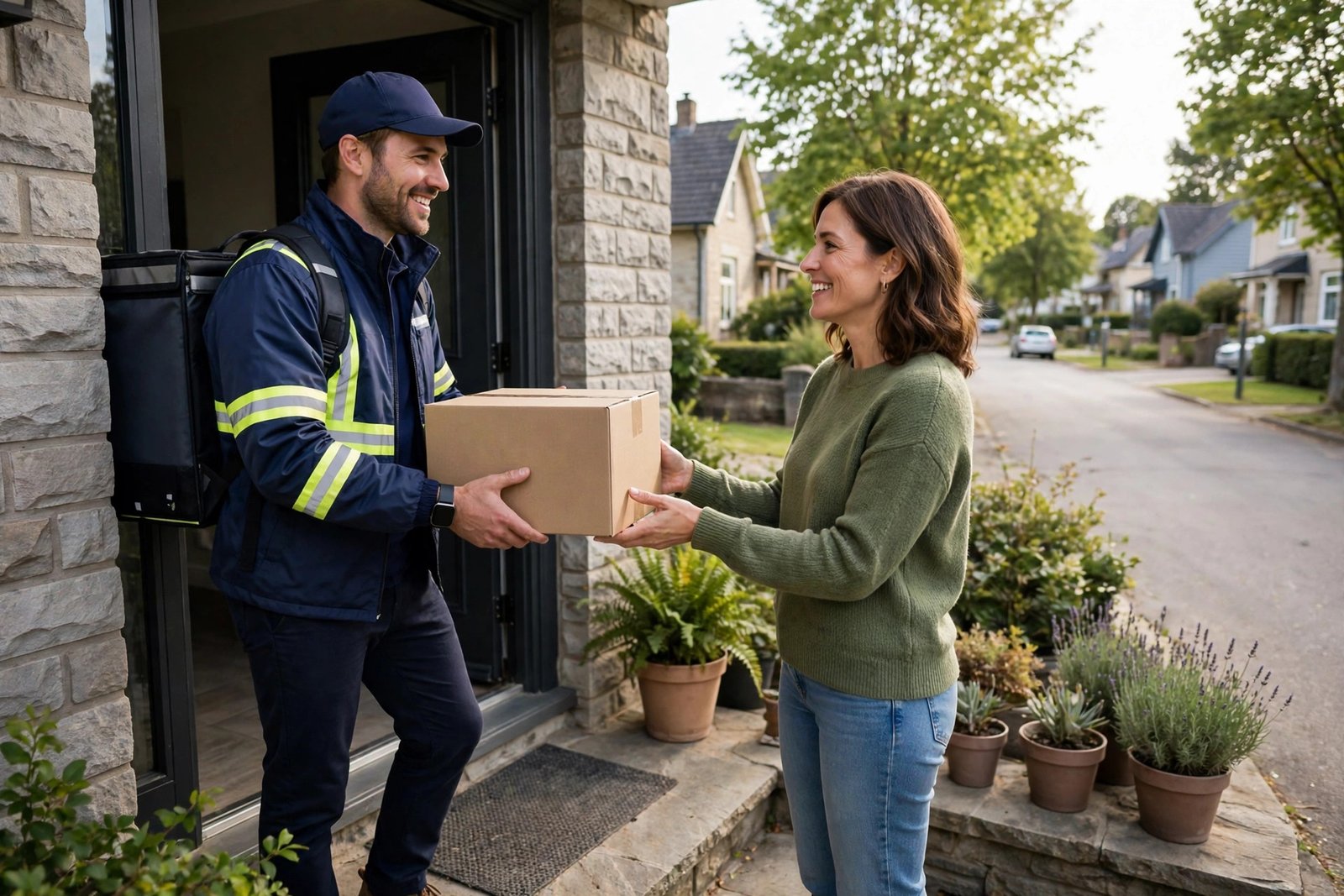
The final leg, often called the last mile, is the most labour-intensive part of the journey. The driver works through the round, navigating parking, entry systems, reception desks and rural lanes that no automation can simplify. At each stop the driver scans the parcel, hands it to the receiver or an authorised person, leaves it in an agreed safe place or with a neighbour where the service allows, or takes it to a pickup point. Depending on the service, the driver may capture a signature, a name, a photograph of the parcel at the door, or a location pin as evidence.
That evidence forms the proof of delivery record linked to the tracking number. Customers who believe a parcel was left incorrectly or who need to confirm who signed should check this record first before contacting the carrier. It often resolves the question immediately, for example by showing a neighbour’s name or a photo of a porch. Our guide to proof of delivery explained shows what each type of record proves and how long carriers keep it.
If nobody is available and no safe option exists, the driver records a failed attempt, leaves a card or sends a message, and the parcel returns to the depot or goes to a pickup point for a further attempt or collection under the carrier’s policy. Keep the attempt card and tracking reference safe. Most redelivery and collection processes are driven by those numbers, and a prompt response gives you the widest choice of options before a parcel is returned to the sender after the holding period.
Delays, Exceptions and Returns
Even in a well-run network, exceptions happen. Severe weather, road closures, vehicle breakdowns, hub congestion at peak season, incorrect addresses and restricted-item holds can all interrupt the standard flow. Tracking language for these events is deliberately general, using phrases like delay, exception or held. The practical response is usually the same: check that the latest scan is within the expected window for the service you bought, confirm the carrier has a working phone number for the receiver, and allow one full cycle for the next movement before escalating.
Peak periods deserve special patience and planning. In the weeks before major holidays, volumes surge, hubs run extended sorts, and standard delivery estimates stretch. Senders who dispatch early, pack robustly and set honest customer expectations experience far fewer problems than those who book the cheapest service at the last moment. Businesses should also prepare for returns as a normal part of shipping. A return typically travels the same network in reverse under a new waybill and tracking number, so never reuse the original label. Clear returns instructions inside the parcel and a simple booking process for customers protect repeat sales.
International parcels follow the same broad stages with an added customs stage between export and import networks. Goods are checked against their invoice and declaration data, any duties or taxes are assessed under the terms of the shipment, and only then does the parcel join the destination country’s depot system. That extra stage is the main reason international estimates are given as ranges rather than single days.
Conclusion
Parcel shipping works because each stage hands over cleanly to the next: a correctly booked and packed parcel, a scanned collection, an overnight hub sort, linehaul to the destination depot, a sequenced local round and a recorded delivery at the door. When you know the stages, tracking stops being a string of mysterious codes and becomes a readable story of your parcel’s progress. Ship with accurate information, keep your handover receipt and tracking number, and you will be able to follow, explain and, when needed, fix almost any delivery journey.

2 Comments on “How Parcel Shipping Works: From Drop-Off to Doorstep”